
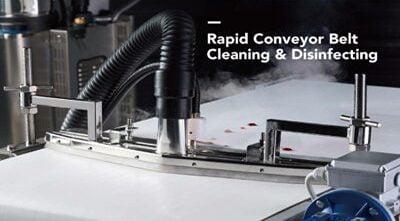
In food production, conveyor belt cleaning is not optional. It directly affects food safety, audit compliance and production continuity. Choosing the wrong food conveyor cleaning system leads to contamination risks, failed inspections and unnecessary downtime.
This guide explains how to choose a food conveyor cleaning system that maintains hygiene without slowing production.
Food conveyors face unique cleaning challenges
Food conveyors accumulate more than visible debris. Oils, sugars, proteins and fine residues form biofilm that is difficult to remove with basic washing. If not properly managed, this creates ideal conditions for bacterial growth and cross-contamination.
Food facilities must clean conveyors while dealing with:
- Strict hygiene and audit requirements
- Limited downtime between production runs
- High sensitivity to moisture and chemicals
A food conveyor cleaning system must solve all three at once.
Start with hygiene risk, not belt size
Many facilities focus on conveyor length or belt width first. That is a mistake.
The real starting point is hygiene risk:
- Is the product raw or ready-to-eat
- Does residue contain oils, sugars or proteins
- Is cross-contamination a concern
High-risk food environments require systems that sanitise as well as clean. Surface cleaning alone is not enough.
Why shutdown cleaning fails in food production
Stopping production to clean conveyors creates pressure to rush the process. In food facilities, rushed cleaning means missed areas and inconsistent hygiene outcomes.
More importantly, moisture from traditional washdown methods often requires extended drying time. This delays restart and increases the risk of re-contamination.
If cleaning depends on shutdowns, hygiene will eventually be compromised.
The role of dry steam in food conveyor cleaning
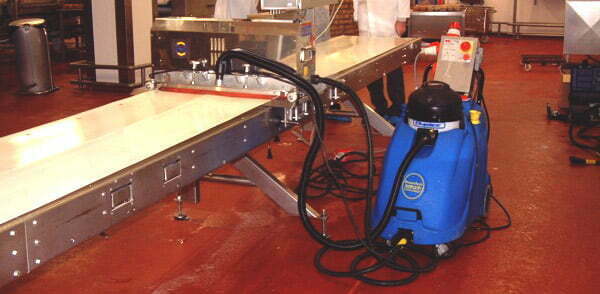
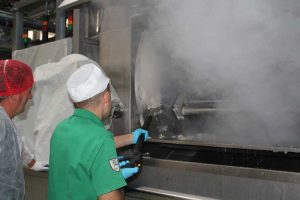
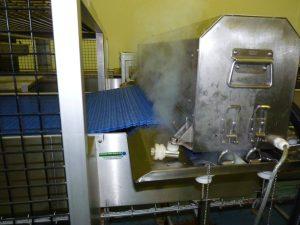
Dry steam cleaning is increasingly used in food conveyor cleaning systems because it addresses hygiene and downtime at the same time.
Dry steam:
- Breaks down grease and food residue
- Reaches into belt textures and joints
- Sanitises using high temperature
- Uses minimal moisture, reducing drying time
Because steam evaporates quickly, conveyors can often be cleaned while running or with minimal speed reduction.
Matching the system to food-grade belt types
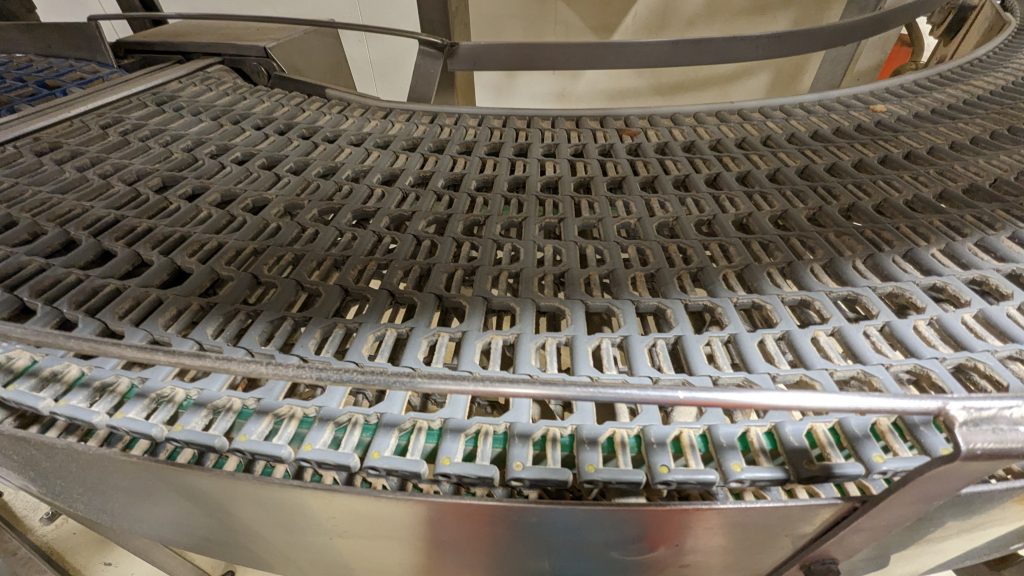
Food conveyors use a variety of belt materials including PVC, polyurethane and modular plastic belts. Each responds differently to heat, pressure and moisture.
The right system must:
- Clean without degrading belt material
- Reach joints, hinges and return runs
- Avoid excessive water that can spread contamination
A food conveyor cleaning system should be designed around belt construction, not applied as a generic solution.
Frequency matters more than intensity
In food processing, aggressive deep cleaning done occasionally increases risk. It wears belts faster and leaves long gaps between cleaning cycles.
Effective food conveyor hygiene relies on:
- Frequent light cleaning
- Preventing buildup before it hardens
- Integrating cleaning into daily production routines
Systems designed for regular use deliver more consistent audit outcomes and lower maintenance costs.
What to look for in a food conveyor cleaning system
The right system for a food facility:
- Maintains hygiene without stopping production
- Minimises water and chemical use
- Supports frequent cleaning cycles
- Reduces manual handling and labour risk
- Fits within existing production layouts
If operators avoid using the system because it slows production, it is the wrong system.
A food conveyor cleaning system is part of food safety, not just maintenance. The best systems work continuously in the background, protecting hygiene standards while allowing production to run at full speed.
In food facilities, the right cleaning system protects product quality, compliance and uptime at the same time.
FAQ
Can food conveyors be cleaned while operating?
Yes. With the right system, conveyors can be cleaned during operation or with minimal speed reduction.
Is steam safe for food conveyor belts?
Dry steam is widely used in food environments and is effective for hygiene with minimal moisture.
How often should food conveyors be cleaned?
Frequent light cleaning is more effective than infrequent deep cleaning in food production.
Does proper cleaning help with audits?
Yes. Consistent conveyor hygiene reduces contamination risk and supports audit compliance.